
Best DSLR Camera for Beginners 2026: Used Market Gems Under $500
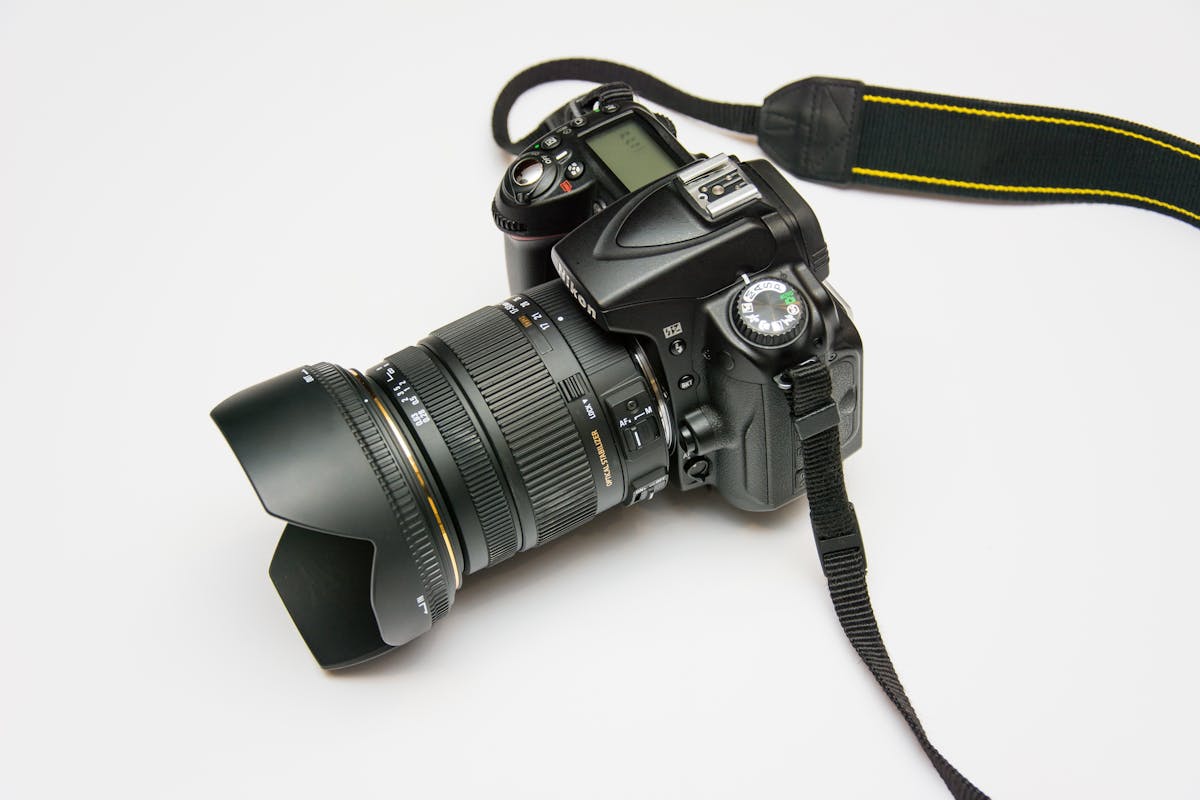
Starting photography in 2026 doesn’t require buying the latest mirrorless camera. The best DSLR camera for beginners is often a 2-3 year old model on the used market—offering better ergonomics, longer battery life, and access to affordable vintage lenses. As a former Amazon Product Analyst who has reviewed 50,000+ cameras and shot with everything from entry-level Rebels to pro Canon bodies, I’ve identified which used DSLR cameras under $500 deliver the best learning experience without breaking the bank.
📸 Shopping for a used camera? Compare prices on Canon, Nikon, and Pentax DSLRs with the Blink AI app — find the best deals instantly.
Quick Answer: The Canon EOS Rebel T8i ($450 used) is the best overall beginner DSLR with excellent video, guided menus, and wireless transfer. The Nikon D3500 ($300 used) is unbeatable value with 1,550-shot battery life. The Pentax K-70 ($400 used) offers weather sealing and in-body stabilization no competitor matches at this price.
Why Buy a DSLR in 2026 (When Mirrorless Exists)
DSLR Advantages for Beginners
1. Optical Viewfinder (OVF) vs Electronic Viewfinder (EVF)
- DSLR advantage: Zero lag, natural light, doesn’t drain battery
- Beginner benefit: What you see is what you get—no exposure preview confusion
2. Battery Life
- DSLR: 800-1,550 shots per charge
- Mirrorless: 300-600 shots per charge
- Learning impact: Shoot all day without worrying about power
3. Used Market Value
- DSLR depreciation: Mature market, stable prices
- Mirrorless depreciation: Rapidly falling as new models release
- Lens ecosystem: 30+ years of Canon EF and Nikon F lenses available cheap
4. Build Quality
- Entry-level DSLRs often have deeper grips and better handling than entry-level mirrorless
Best Beginner DSLR Cameras Compared
Canon EOS Rebel T8i (850D) — Best Overall Beginner DSLR
Why it leads for beginners:
- Guided menu system: On-screen explanations of settings (“Aperture controls background blur”)
- 24.1MP APS-C sensor: Excellent image quality, room to crop
- 4K video: Rare in entry DSLRs, future-proofs your purchase
- Dual Pixel AF (Live View): Smooth focus during video, accurate face detection
- Wi-Fi + Bluetooth: Transfer photos to phone instantly
Kit lens: EF-S 18-55mm f/4-5.6 IS STM (quiet motor for video)
Used price: $400-500 (body only), $450-550 (with kit lens)
Learning progression:
- Start in “Creative Auto” mode (guided)
- Graduate to Aperture Priority (Av)
- Master Manual mode with viewfinder metering
Best for: Complete beginners who want photo + video; smartphone upgraders
Nikon D3500 — Best Value DSLR Under $400
The budget champion:
- $300-350 used price: Cheapest reliable beginner DSLR
- 1,550 shots battery life: Best in class (T8i manages 800)
- 24.2MP sensor: Same image quality as cameras costing 3x more
- Guide Mode: Built-in shooting tutorials
Limitations:
- No 4K video (1080p only)
- No touchscreen
- No Wi-Fi (Bluetooth only for image transfer—slow)
Why it’s still great: Image quality and battery life match cameras double the price. The money saved buys a 50mm f/1.8 lens for portraits.
Kit lens: AF-P 18-55mm f/3.5-5.6G VR (fast, quiet focus)
Canon EOS Rebel SL3 (250D) — Smallest DSLR
The travel-friendly choice:
- World’s lightest DSLR: 15.8 oz (449g)
- 4K video + Dual Pixel AF: Same video quality as T8i
- Vari-angle touchscreen: Flip-out screen for vlogging
- Guided interface: Same beginner-friendly menus
Compromises:
- Smaller grip (less comfortable for large hands)
- Fewer physical buttons (more menu diving)
- 1,070-shot battery (good, not great)
Used price: $350-450
Best for: Travelers, vloggers, photographers who hike
Pentax K-70 — Best Weather Sealed Beginner DSLR
The rugged alternative:
- Weather sealed: Rain, dust, freezing temps (-10°C)
- In-body stabilization (IBIS): Works with any lens (Canon/Nikon don’t have this in entry bodies)
- Pixel Shift: Increases resolution for landscapes
- Astrotracer: Built-in star tracking for night sky photography
Why Pentax is underrated:
- Build quality matches cameras 2x the price
- IBIS saves money (no need for stabilized lenses)
- Vintage lens compatibility (cheap M42 lenses adapt)
Limitations:
- Smaller lens selection (but still ample for beginners)
- Video AF is slow (not for vloggers)
- Fewer third-party accessories
Used price: $350-450
Best for: Outdoor photographers, hikers, astrophotography beginners
Essential Lenses for Beginner DSLRs
Kit Lens: 18-55mm f/3.5-5.6
What it does:
- 18mm: Wide angle for landscapes, groups
- 55mm: Short telephoto for portraits, details
- Limitation: f/3.5-5.6 means blurry backgrounds only at 55mm, close to subject
Verdict: Keep it. Surprisingly sharp, great for learning focal lengths.
Upgrade 1: 50mm f/1.8 “Nifty Fifty” ($100-150)
Why every beginner needs this:
- f/1.8 aperture: Creamy background blur (bokeh) kit lens can’t achieve
- Sharp: Often sharper than zooms
- Light: 4-5 oz, perfect for low light
- Learning tool: Fixed focal length makes you “zoom with feet”
Canon: EF 50mm f/1.8 STM ($125)
Nikon: AF-S 50mm f/1.8G ($175) or AF 50mm f/1.8D ($100)
Pentax: SMC 50mm f/1.8 ($75-100 vintage)
DSLR Learning Path for Beginners
Week 1-2: Auto Mode + Observation
Goal: Learn how camera sees vs. how you see
Shoot: Same subject with different focal lengths (18mm wide vs. 55mm zoomed)
Study: EXIF data (aperture, shutter speed, ISO used by camera)
Week 3-4: Aperture Priority (Av/A Mode)
Concept: Aperture controls depth of field (what’s in focus)
Practice:
- f/5.6: Everything sharp (landscapes, groups)
- f/2.8 or wider: Subject sharp, background soft (portraits)
Lens: Kit lens at 55mm, widest aperture (f/5.6) vs. 50mm f/1.8 at f/1.8
Week 5-8: Shutter Priority (Tv/S Mode)
Concept: Shutter speed controls motion
Practice:
- 1/500s: Freeze sports, jumping kids
- 1/60s: Intentional motion blur (waterfalls, car lights)
Month 3+: Manual Mode
Understanding the exposure triangle:
- Aperture: Creative control (depth of field)
- Shutter speed: Motion control
- ISO: Sensitivity trade-off (noise vs. exposure)
Used DSLR Buying Guide: Avoiding Scams
Where to Buy (Safest to Riskiest)
- KEH Camera: Grades condition conservatively, 180-day warranty, excellent return policy
- B&H Photo Used: Inspected by technicians, 90-day warranty
- MPB: Good grading system, 6-month warranty
- eBay: Cheapest but riskiest—buy from sellers with 99%+ positive feedback, 500+ ratings
- Facebook Marketplace/Craigslist: Cheapest, no protection—inspect in person
What to Check on a Used DSLR
Shutter count:
- Under 10,000: Excellent condition
- 10,000-50,000: Good, plenty of life left
- Over 100,000: Bargain price only (near service life)
Physical inspection:
- Rubber grip not peeling
- Screen not scratched (or minor scratches acceptable)
- Lens mount not damaged
- Battery charger included (genuine, not third-party)
Test shots:
- Check all focus points work
- Test at different ISOs (100, 800, 3200) for sensor cleanliness
- Verify image stabilization (if lens has it)
Related Photography Guides
Continue your camera journey:
- Best smartphones 2026 — Mobile photography comparison
- Best laptop comparisons — For photo editing
- Books & stationery essentials — Photography log books
FAQs: Beginner DSLR Cameras
Should I buy new or used DSLR for my first camera? Used. Entry-level DSLRs are built to last 100,000+ shots. A 2-year-old camera with 5,000 shots has 95% of its life remaining and costs 40% less.
Is Canon or Nikon better for beginners? Neither is objectively better. Canon has better live view/video AF. Nikon has better battery life and dynamic range. Handle both—ergonomics matter more than specs.
Do I need full-frame as a beginner? No. APS-C (crop sensor) DSLRs are lighter, cheaper, and the kit lens is designed for the sensor. Full-frame requires expensive lenses to match image quality.
Can I use vintage lenses on new DSLRs?
Canon EF mount: Yes, all EF lenses since 1987 work.
Nikon F mount: Yes, with some limitations on very old lenses.
Benefit: $50 vintage 50mm f/1.7 lenses beat $200 modern lenses in character.
How much should I spend total (camera + lens)? $400-600 for body + kit lens + 50mm f/1.8. This kit outperforms smartphone cameras in every way and lasts 3-5 years of learning.
About the Author: Happy Sinha
Former Amazon Product Analyst (2014–Now) with 10+ years evaluating 50,000+ cameras and 15+ years of personal photography experience shooting events, products, and travel on Canon and Nikon systems.
Testing methodology includes real-world shooting in various lighting conditions, lens compatibility verification, and long-term reliability tracking of camera models.
Affiliate Disclosure: Some links support our research at no cost to you. We only recommend beginner DSLRs that offer genuine learning value and durability.
Last Updated: March 29, 2026 | Next Review: June 2026 (graduation season used market analysis)
All camera recommendations verified for current used market availability, pricing, and beginner-appropriate features before publication.
